

Is Age Of Empires Good
Our Verdict
A worthy new entry in the legendary series that's equal parts progressive and dated.
need to know
What is it? Historical existent-time strategy prepare in the medieval era.
Expect to pay $sixty/£50 (or via Xbox Game Pass)
Released Oct 28, 2021
Programmer Relic Amusement
Publisher Xbox Game Studios
Reviewed on Ryzen 7 5800H, Nvidia GeForce 3070 (mobile), 16GB RAM
Multiplayer? Upward to viii players online
Link Official site
On the bear witness of its timeless tyranny over the RTS genre, at that place'due south a instance to be made that there's no surpassing Historic period of Empires 2—now in its 'Definitive' class. Its competitive scene is thriving, people are lapping up its ongoing DLCs like staff of life loaves dished out by a benevolent ruler, and its gorgeous sprites take a cleanliness that 3D graphics but can't quite seem to match.
And then on the one manus, it makes sense that new series programmer Relic has decided to loosely model Age of Empires 4 on the beloved second entry. It strips abroad some of the complexities of Historic period of Empires 3, returning to that lovely exploration-economy-conquest loop while adding mostly welcome touches of its own. Primary among these are the asymmetrical factions, which will almost certainly arm-twist screams of encarmine imbalance but nonetheless count every bit the game'due south greatest success.
On the other hand, reverence to the past can be restricting, and I can't aid but feel that Historic period of Empires 4 could take been something more. While I respect Relic's conclusion to play things fairly safe, that should result in making what's already there really shine; polish those mosque minarets and Moscavian onion domes, pump up those population limits, let bodies fly with physics-y abandon upon impact from cannonballs and elephant heads.
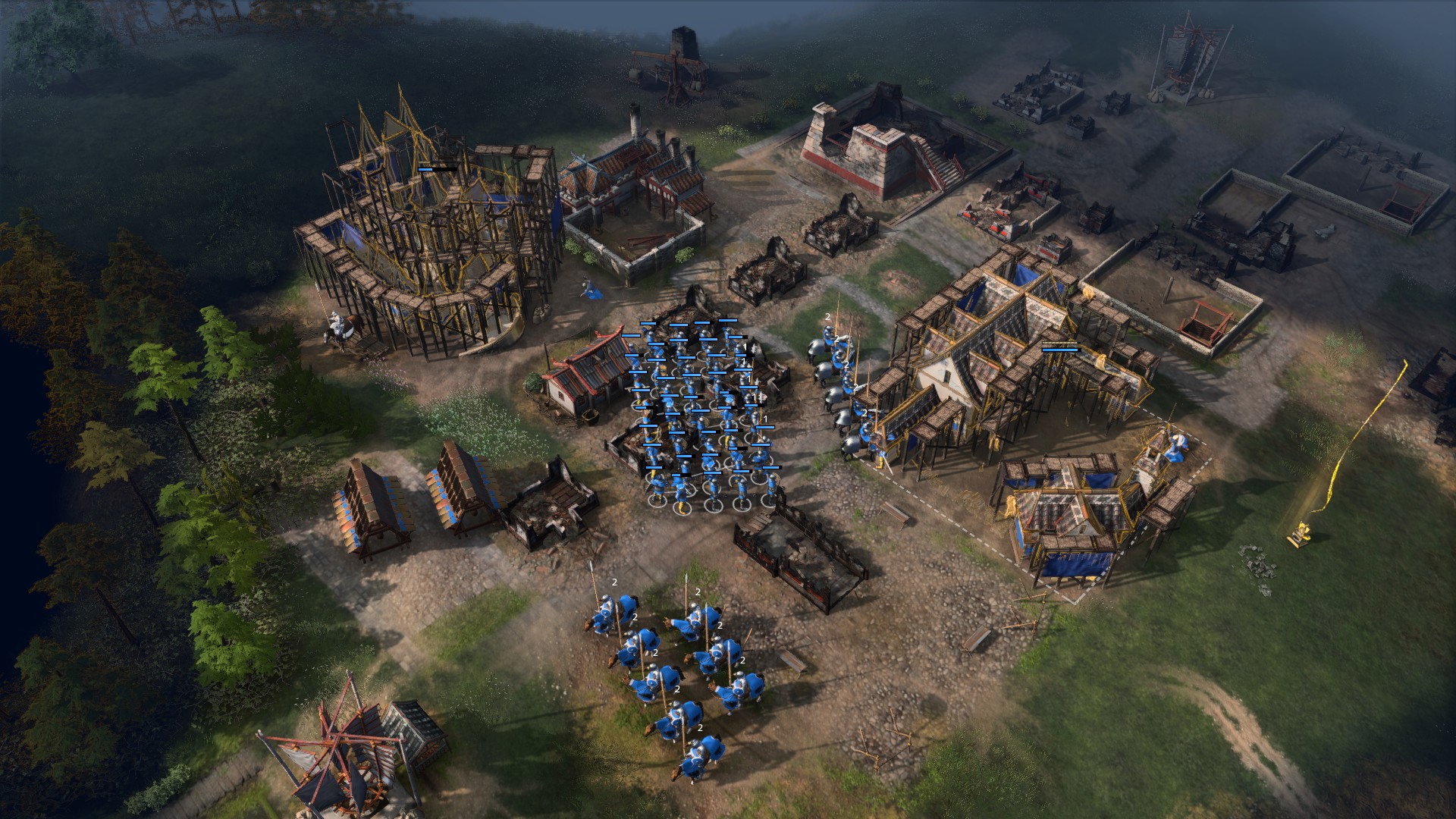
Instead, there's a staid utilitarianism throughout much of Age of Empires 4—everything in information technology works much as it e'er did, but without the flair that could have fabricated it a 1000 celebration of that timeless AoE formula.
Those menus make a proficient beginning impression though: a triumphant take on the Age of Empires theme explodes in your ears while the gilt lines of a medieval globe map gleam in the background. Here yous have your classic Skirmish mode, of form, also as four campaigns and a series of Art of War tutorials that fourth dimension you on various economic and military challenges. Sadly, in that location are no historical battles, with the several skirmish 'presets' feeling like a poor stand-in for a classic serial feature.
The campaigns follow the Normans, Mongols, Rus and English beyond three singled-out eras each. Interposed throughout each campaign are well-baked documentary-like videos showing footage of significant castles, towns, landscapes and battlefields as they are today, superimposing hundreds of wireframe soldiers over them; the close-up of the Bayeux Tapestry is so detailed that I could practically floss my teeth on its coarse clothy threads.
The documentary style permeates into the campaigns themselves, with most of the stories told through a narrator rather than in-game characters. It kind of keeps you at a altitude from Genghis and Kublai Khan, Henry I, Ivan the Terrible and the other movers, shakers and razers of medieval history, which is a tad disappointing given Relic'due south history of great RTS storytelling with Dawn of War.
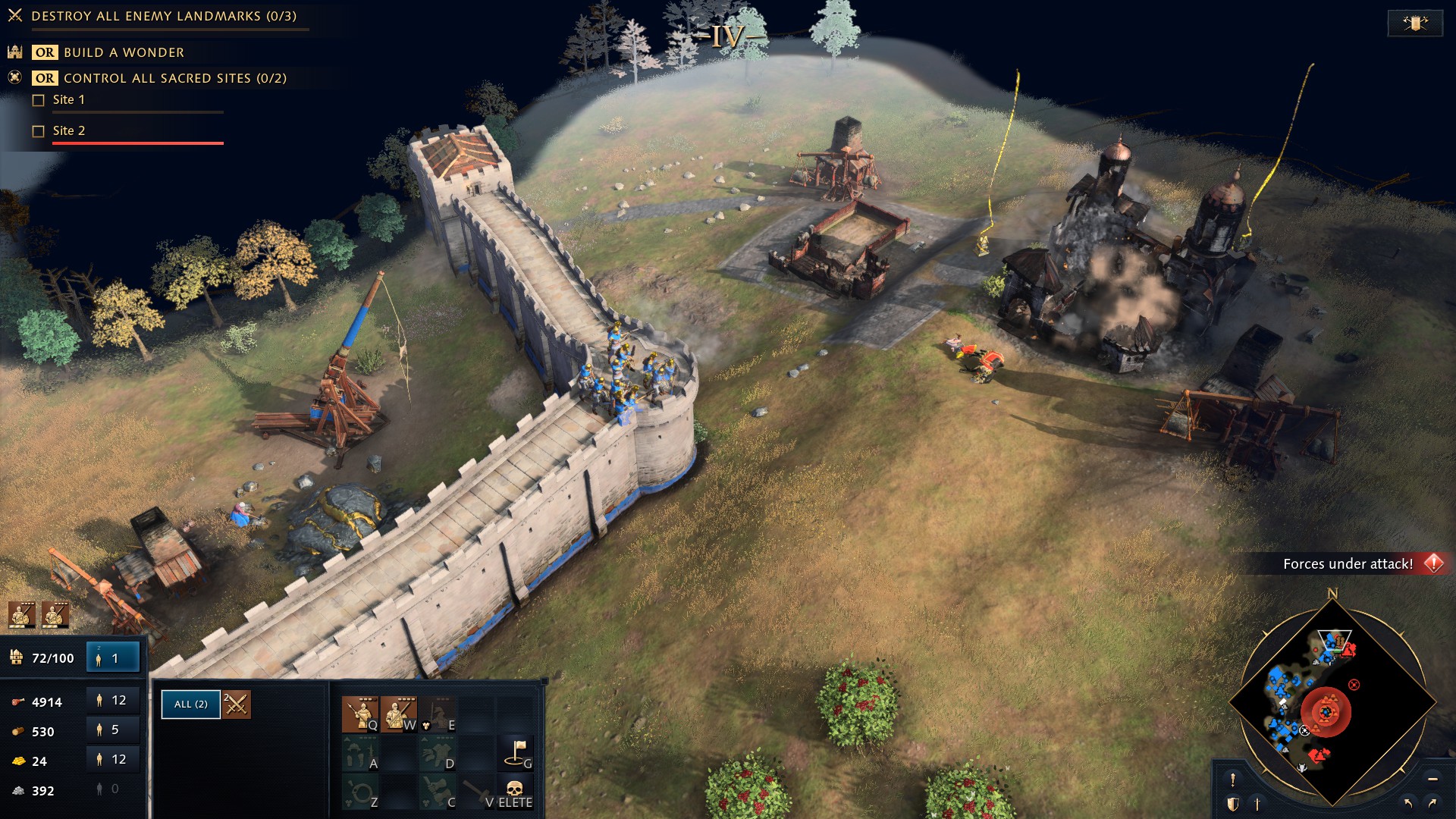
It does also sometimes experience like the squeaky-clean presentation skirts effectually the ickier parts of history. To chart decades of Mongol conquests without mentioning the centrality of terror and massacre to their strategy, for instance, seems similar a chip of a convenient oversight. Regardless, the entrada throws upwards plenty of great set-pieces; there's the Boxing of Xiangyang to establish Kublai Khan as Emperor of People's republic of china, Dmitry Donskoy's power-shifting defeat of the Mongols at Kulikovo, and over in the due west the Boxing of Bremule to establish England every bit a regional ability. These missions aren't like shooting fish in a barrel either, and on standard difficulty I found I had to apace wrap my fingers around the new keyboard shortcuts to keep up with an efficient, nagging enemy.
Damn is it fun to experiment with the different civs and learn their unique means
Simply these sleek campaigns are just a foreword to the stories you'll be crafting on the Skirmish maps with the eight eclectic civs on offering. It's not a huge number, simply the visual and strategic diversity betwixt these factions is one of the most significant evolutions in the serial.
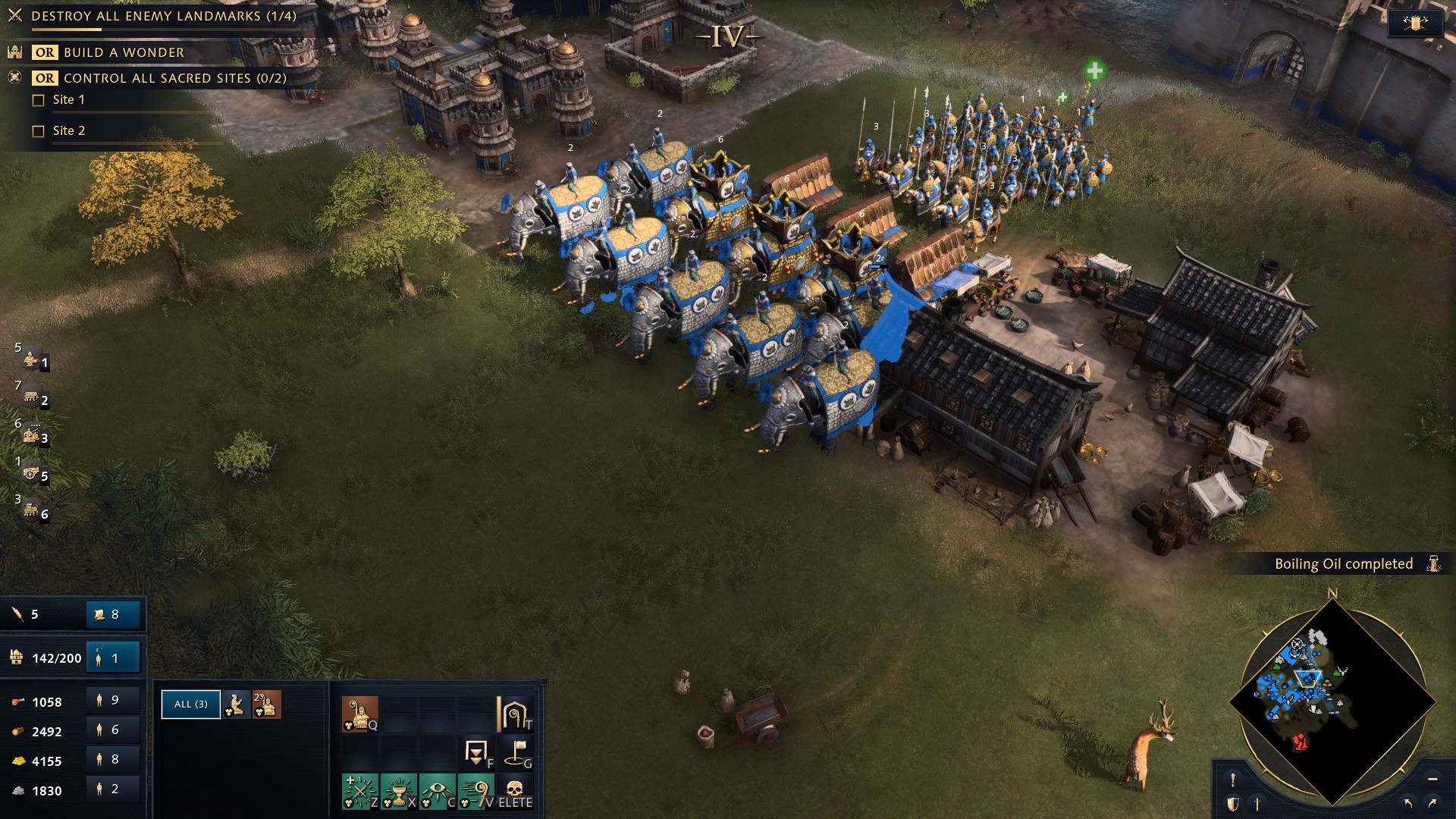
Age of Empires 4 might not have the balanced esport appeal of AoE 2, but damn is it fun to experiment with the dissimilar civs and larn their unique means. The Mongols are the biggest wildcard, capable of packing entire towns up into carts and relocating to anywhere on the map. I had a real nail with the Delhi Sultanate too, stomping my hapless AI enemies with State of war Elephants they had no answer for. Delhi'due south employ of garrisoned scholars instead of resources to research technologies turns the blacksmith into a kind of persistent research lab ticking along in the background while you become on with other stuff. Even the relatively vanilla English take no less than 10 unique traits, in their example focused largely around agriculture and establishing defensive construction networks that grant speed bonuses to your units.
Your strategic path is further refined each time y'all advance an age, when you lot get to pick one of two civ-specific landmarks that will accelerate your empire in dissimilar directions. The bulwarky Holy Roman Empire tin slam downwardly the Burgrave Palace, for example, capable of producing units in groups of five, while the Rus High Trade House generates its own deer, feeding into the Rus bounty mechanic through which they earn gold by hunting.
A couple of the civs fifty-fifty accept their own twists on age advancement. The Abbasids add wings onto their Business firm of Wisdom instead of erecting new landmarks, while the Chinese can build 2 landmarks per age and found dynasties which volition grant yous unlike bonuses for the rest of the game. You lot can even 'build tall', with Abbasids and the Holy Roman Empire gaining bonuses based on buildings y'all place near their primal structures.
While the cadre mechanics and loops will exist familiar, the carefully designed civs and age-advancement choices offering an intricate new web of strategies and approaches to each friction match. It's Relic's bravest evolution of that precious AoE formula, and it actually diversifies the game even though broad-scale online play will probably reveal tons of balancing issues over the coming months. But hey, that'southward all part of the procedure in a serial where a single title can be improved and iterated over many years.
Upon starting a new game, returning players will immediately settle into the rhythm of resource-gathering, villager spamming, scouting and outrageous forwards-settling (especially effective with the nomadic Mongols). Victory conditions have been smoothed out to keep matches pacey, with military conquest now only requiring y'all to destroy an enemy's landmarks, the number of which increases with each age.
For a religious victory, yous can no longer take relics back to the prophylactic of your base, but instead have to hold onto all the Sacred Sites on a map for 10 minutes. Given their primal locations on maps, this should encourage more feisty strategies than the sneaky relic-hoarding of AoE past. But all you defensive-minded turtles out there needn't worry: the Wonder victory—whereby you build a late-game wonder and hold information technology for x minutes—withal exists.
Sieges feel much amend thank you to the power of infantry units to create battering rams and siege towers. It does wonders for the pacing that you lot no longer have to guide your rams and gangly siege towers across an entire map, and it feeds into the freshly scalable stone walls too. Sadly, I'm all the same to find the full strategic benefits of siege towers every bit opposed to great walls downwardly with trebuchets from a safe distance. Positioning soldiers on walls defensively, on the other mitt, offers increased sightlines, and I shamelessly exploited this against the AI by building stone walls right up in their business, picking off key economic buildings with wall-mounted archers.
Finally, the power to quickly rotate and position unit groups on an centrality is not bad for battle micromanagement, letting y'all set up defensive positions or proper army formations more elegantly than before. These aren't huge changes, but they all help the combat experience that chip cleaner.
Despite a single 30-infinitesimal game of Age of Empires ostensibly spanning decades of technological progress, the series has never really evoked the sense of fourth dimension passing; for all I knew from playing the original AoE, Rome really was built in a day. Age of Empires 4 addresses that dissonance with a few discerning touches. When you plunk downwardly buildings, for instance, you see sped-up wireframe outlines of builders popping up at different points effectually the construction site—a bit like erstwhile stop-motion footage of a skyscraper existence erected. Each civ has its own soundtrack too, which mixes in beautifully from the menu music and evolves throughout the ages. They're trivial things that increase the grandness of your condensed journey, ironically in a game that actually seems to be a little fleck faster than its predecessors.
And withal, for every thoughtful tweak and characteristic there's an equal and opposite misstep holding Age of Empires 4 back from greatness, because god forbid it outshines the immortal 2nd entry.
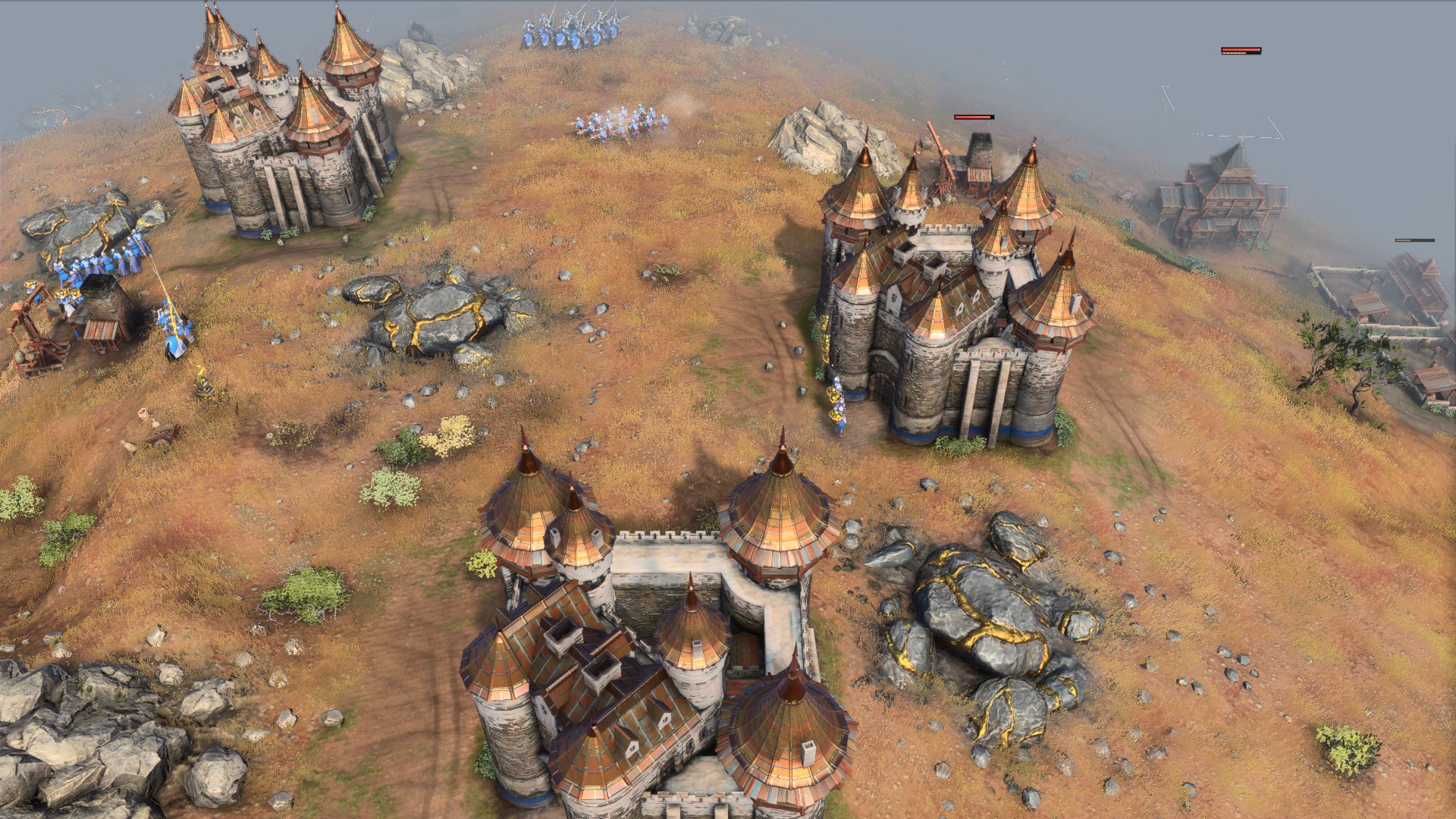
Edifice and ground textures are on the washed-out side (and nope, I won't accept explanations that this is merely part of the game's more 'painterly' art way). Having gone back to Age of Empires 3: Definitive Edition for comparison, I found that non only are textures cleaner in that location, just the game is more secure about showing them off by letting you zoom in further.
For every thoughtful tweak and feature at that place'south an equal and opposite misstep holding Age of Empires 4 back from greatness
Speaking of zoom, the combination of high camera angle and limited zoom-out makes for quite a narrow field of view. I'd honey to have seen some kind of free camera functionality that lets you admire your town planning and get into the nitty-gritty of battles, or at to the lowest degree the option for a classic isometric perspective.
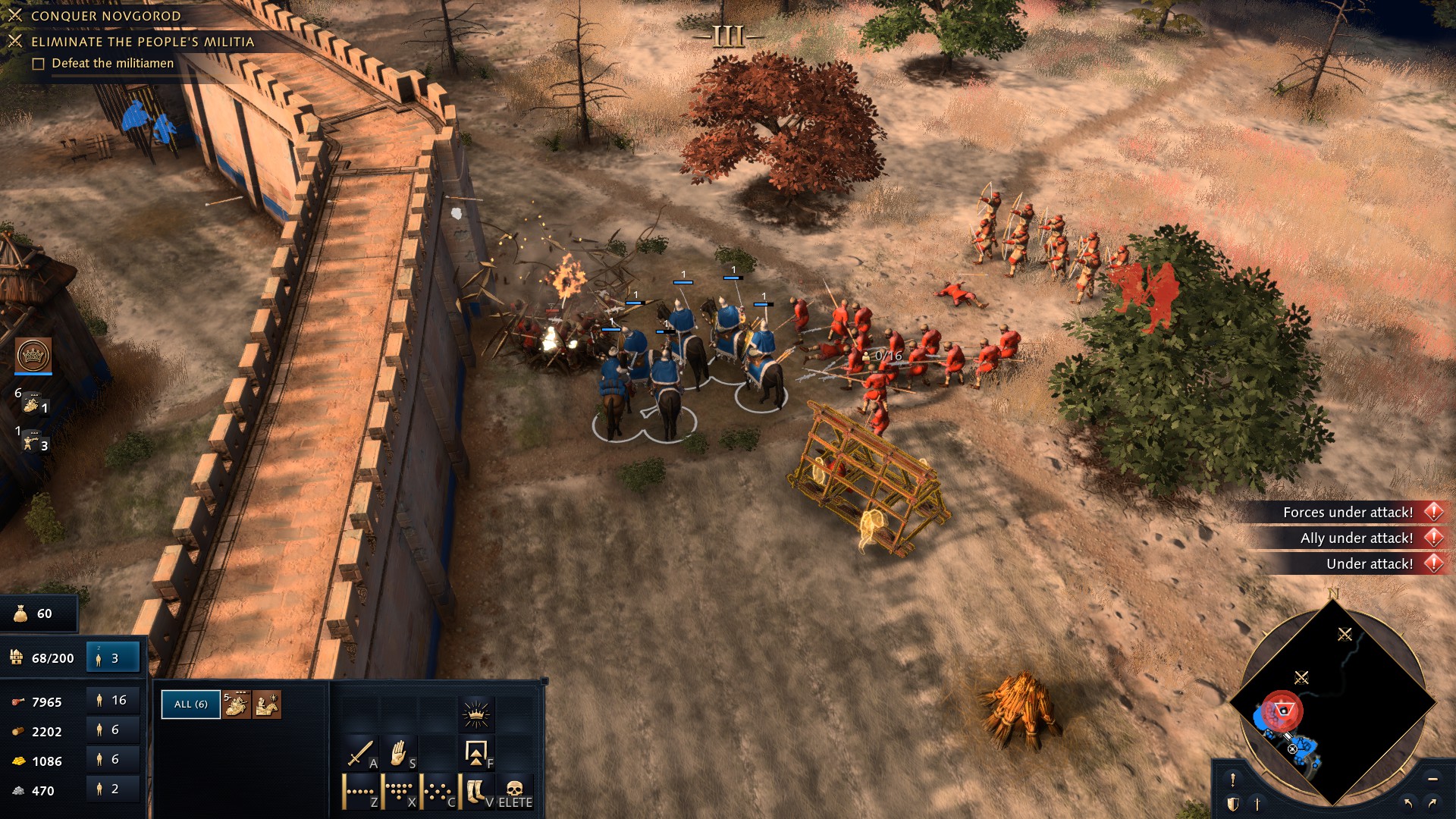
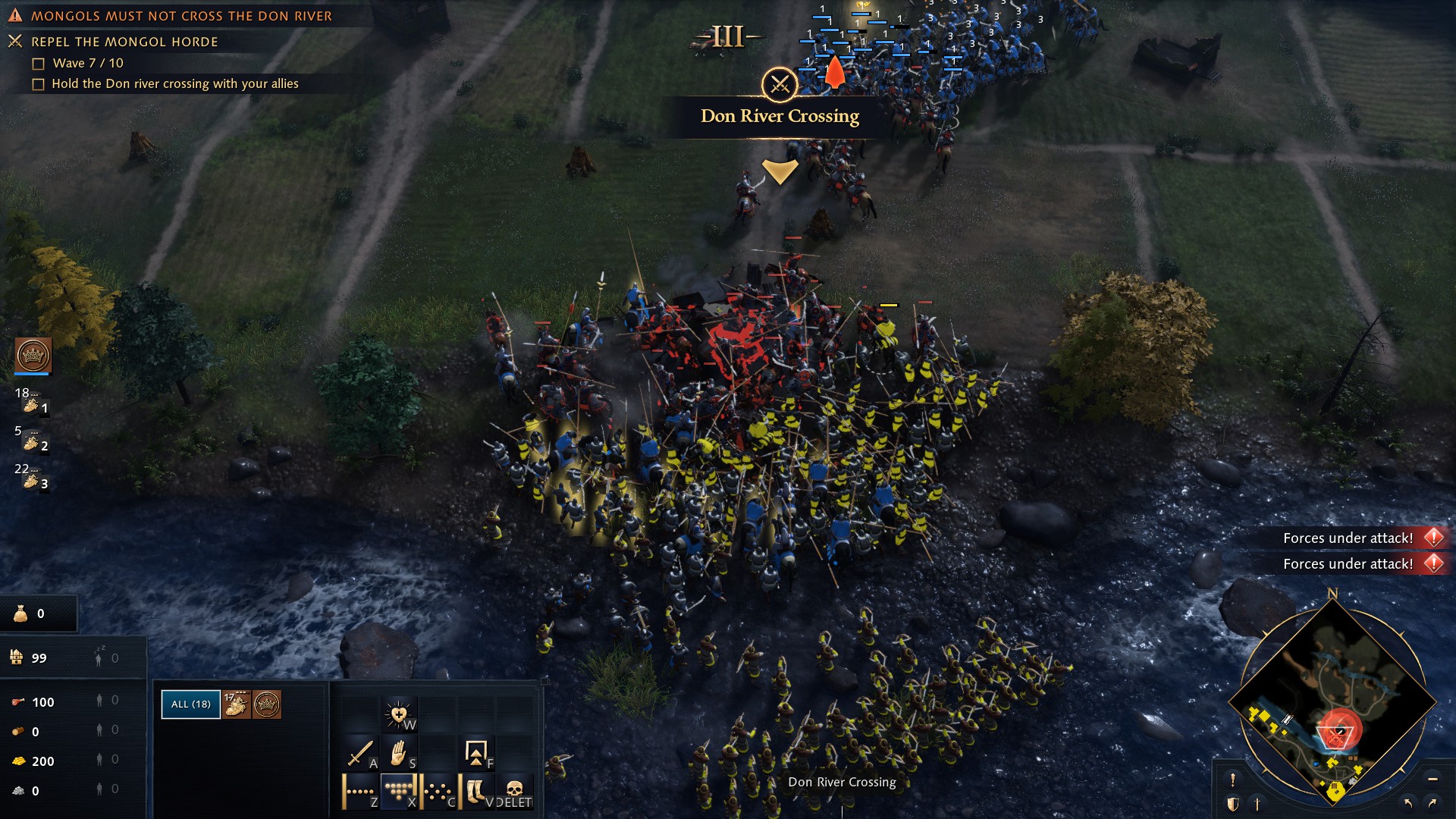
And battles notwithstanding feel likewise polite, every bit units and cavalry accuse each other simply to stop just short of collision and kickoff jabbing at each other with their pokey-sticks—it'due south kind of alarming that I all the same take to refer back to 2004'southward Battle for Eye-World as an example of 'cavalry collisions washed skilful'. Units in vague proximity to enemy war elephants seem to drop dead, and there's no dynamism when castle walls fall out from under units or bombards accident troops away. Similarly, keeping population caps to the traditional 200 means that battles never actually reach the grand scale the trailers tease you with (unless orchestrated by the campaign).
Simply peradventure what I think of as anachronism others volition think of as purism; a game zealously keeping to an excellent formula, right down to its strangely ceremonious combat, and non-existent horse-turning animations that await a bit like a carousel pony rotating loosely on its axis. The fact remains that the strong AoE loop, ever so slightly refined, is as compelling as ever, spruced up by a colourful roster of truly distinct civs. Knowing how unique each faction is makes the inevitable introduction of new ones a tantalising prospect.
Age of Empires iv has potent foundations to really abound into something, but it comes at a time when Age of Empires 2: Definitive Edition is adding long-desired co-op campaigns and an e'er-expanding library of historical battles. Past comparison, Age of Empires 4 looks a little content-sparse, especially for a £50 game (conversely, information technology'south an absolutely glorious twenty-four hour period one release on Xbox Game Pass).
Relic told us last month that they weren't looking to steal AoE 2's player base or place at the top of the series hierarchy, only rather requite players an interesting new culling. In this sense I guess they've succeeded, simply it feels like with a scrap more attending to detail (rather than, say, hours of drifting documentary footage), they could accept heralded a new AoE era rather than invoking a past one.
But in a serial where a single game can manifest into its best grade years, even decades, later, the only matter really standing in the way of Age of Empires 4's growth is the ongoing success of its predecessors. It offers enough new ideas amidst the sturdy old foundations to rank among them—even if it's not nevertheless ready to rule.
Historic period of Empires 4
A worthy new entry in the legendary series that'southward equal parts progressive and dated.

Is Age Of Empires Good,
Source: https://www.pcgamer.com/age-of-empires-4-review/
Posted by: danielyese1983.blogspot.com
0 Response to "Is Age Of Empires Good"
Post a Comment